
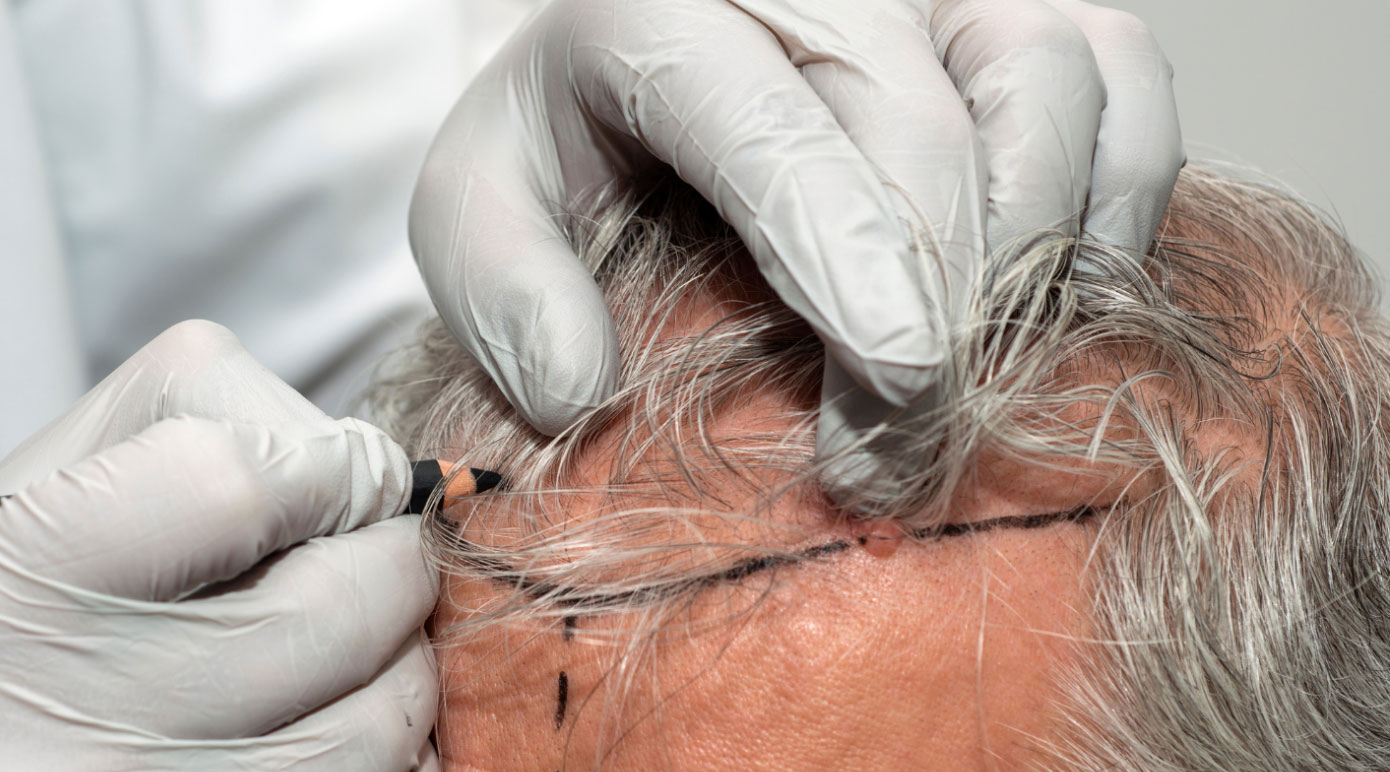

DHI Hair Transplant (Direct Hair Implantation) is an advanced hair restoration technique that involves extracting hair follicles from the donor area and implanting them directly into the recipient area using specialized medical instruments. Unlike traditional FUE hair transplantation, DHI does not require a separate channel-opening stage, allowing for a more precise and controlled procedure. Thanks to its minimally invasive nature, the recovery process is generally more comfortable while aiming to achieve natural and aesthetically pleasing results. Today, DHI is one of the most preferred hair transplant methods for individuals seeking a permanent solution to hair loss.
What Is DHI Hair Transplant?
DHI (Direct Hair Implantation) stands for a hair transplantation technique in which hair follicles are extracted and implanted directly into thinning or bald areas using a specialized Choi implanter pen.
In conventional hair transplant procedures, follicle extraction and implantation are carried out as separate stages. With the DHI technique, this process becomes more streamlined and efficient. As a result, procedural precision is enhanced while providing a more comfortable experience for the patient. While FUE hair transplantation typically consists of three main stages, DHI hair transplantation is generally completed in two stages.
The primary goals of the DHI method are to increase hair density, achieve a natural appearance, preserve existing hair, and enable patients to return to their daily routines more quickly.
Important Considerations Before and After DHI Hair Transplantation
Although DHI hair transplantation is considered a minimally invasive procedure, it must be performed under sterile conditions. Procedures carried out in environments that do not meet proper hygiene standards may increase the risk of infection. Such complications can negatively affect both the healing process and the overall success of the transplant. For this reason, individuals considering a hair transplant should choose experienced and reputable clinics.
Following the procedure, mild redness, sensitivity, itching, or scabbing on the scalp is generally considered normal. These symptoms usually subside on their own within one to two weeks. However, prolonged redness, pain, or sensitivity may require professional evaluation.
The success of a DHI hair transplant depends not only on the technique itself but also on the experience of the medical team and the technological infrastructure of the clinic. Factors such as the quality of the equipment used and the accurate extraction and implantation of hair follicles play a crucial role in determining the final outcome. Therefore, individuals seeking natural and long-lasting results should choose professional centers with experienced specialists and advanced technology.
What Are the Advantages of DHI Hair Transplantation?
DHI hair transplantation offers several important advantages due to its advanced technique.
- Hair follicles are implanted immediately after extraction, helping preserve graft viability.
- It allows for denser hair implantation.
- It is particularly effective in creating a natural-looking hairline.
- Hair growth direction and angles can be planned with greater precision.
- The recovery period is generally shorter.
- Scabbing and tissue trauma are minimized.
- The risk of damaging existing hair follicles is relatively low.
- Since no traditional channel-opening process is performed, bleeding may be reduced.
These advantages make DHI hair transplantation a popular option for individuals who prioritize natural-looking results and have high aesthetic expectations.
Reviews from People Who Have Undergone DHI Hair Transplantation
The DHI hair transplant method is based on the direct implantation of hair follicles into the recipient area using specialized implanter pens. This allows for a more controlled and precise application.
Many individuals experiencing hair loss choose this technique as a permanent solution. It is particularly appreciated for its natural-looking outcomes and comfortable recovery process. However, results may vary from person to person depending on factors such as hair characteristics, the extent of hair loss, and individual expectations.
I waited and thought about getting a hair transplant for five years. Trust is extremely important when it comes to this procedure. In fact, I only realized a friend had undergone a hair transplant six months after meeting him because the result looked so natural. After seeing that, I didn’t hesitate for a single day. I booked my appointment immediately, and the procedure was performed just one week later. You can confidently put yourself in Yavuz’s hands and trust the process completely.
Reşat Dişbudak
I chose DHI Premium based on the recommendations of friends who had previously undergone hair transplant procedures there, and I am extremely satisfied with my experience. The attention, care, and continuous guidance provided by the team were especially valuable throughout the process. My procedure was completed smoothly, and everything went exactly as planned.
Süleyman Dağdelen
I chose this clinic after extensive research and recommendations. At first, I was quite excited and a little nervous, but the consultations and planning process helped eliminate all my concerns and put me at ease. During and after the procedure, I did not experience any pain. I can genuinely say that they are a highly professional and experienced team.
Emir Öztürk
Who Is Suitable for DHI Hair Transplantation?
DHI hair transplantation is a modern hair restoration method that can be applied to many individuals who have a suitable donor area. It is especially beneficial for those with fine hair strands or individuals who wish to preserve their existing hair.
Thanks to modern implanter pen technology, hair follicles can be placed with exceptional precision, allowing the procedure to be performed safely and effectively. However, successful hair transplantation requires a sufficient number of healthy hair follicles in the donor area, typically located at the back of the scalp.
For individuals with advanced hair loss, alternative hair transplant techniques may also be considered. In such cases, the most appropriate treatment method is determined after a detailed hair and scalp assessment.
In addition, treatment planning should be approached carefully in younger individuals whose hair loss pattern has not yet stabilized. For this reason, evaluation is generally recommended for individuals aged 25 and older. Factors such as hair loss history, current hair density, and personal expectations are taken into consideration when creating a treatment plan to achieve the best possible outcome.
A comprehensive hair analysis and consultation process are essential for determining whether DHI hair transplantation is the right option for you.
